AI & Process Modeling
How to empower process engineers with AI (without deskilling them)

Thom Uffing
Process Innovation

Most AI pitches aimed at process engineers get the framing wrong. They promise to do the modelling for you, which sounds less like empowerment and more like replacement. Understandably, good engineers push back.
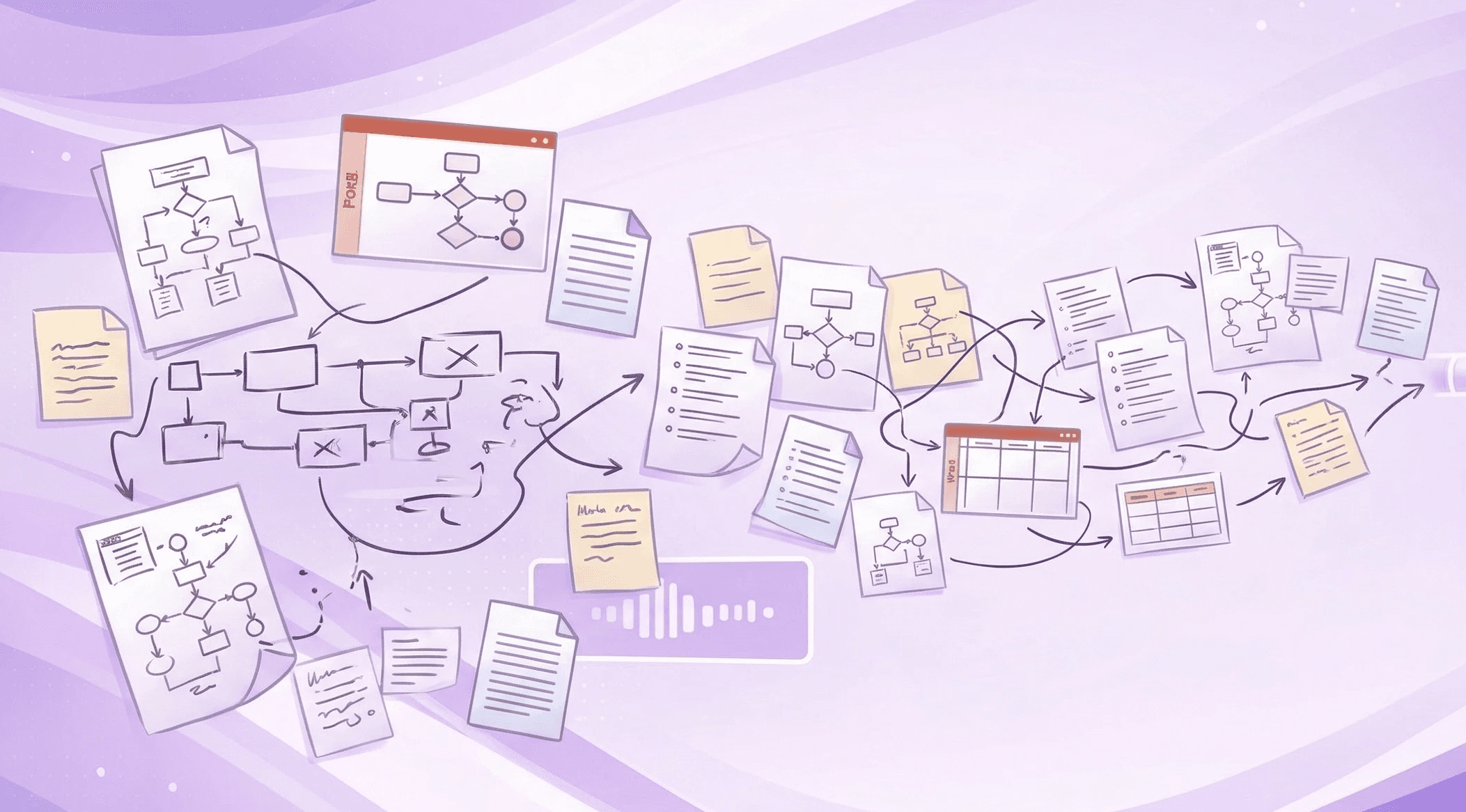
The useful version is narrower and more honest. AI is very good at producing a first draft from messy input. It is not good at knowing which process actually matters. Nor which exception will bite you in an audit. Split the work along that line and the tooling stops threatening anyone.
What process engineers are actually short of
Ask a process engineer what limits their output. The answer is almost never "ideas about processes".
It is usually some mix of:
Production time. Drawing, redrawing and reformatting models eats the week.
Access to people. Stakeholders give you forty minutes, then disappear for three weeks.
Consistency pressure. Every model has to match the house standard, forever.
Currency. Documentation is out of date roughly the moment it is approved.
None of those are thinking problems. They are throughput problems, and throughput is exactly what AI can move.
Give AI the first draft, keep the judgement
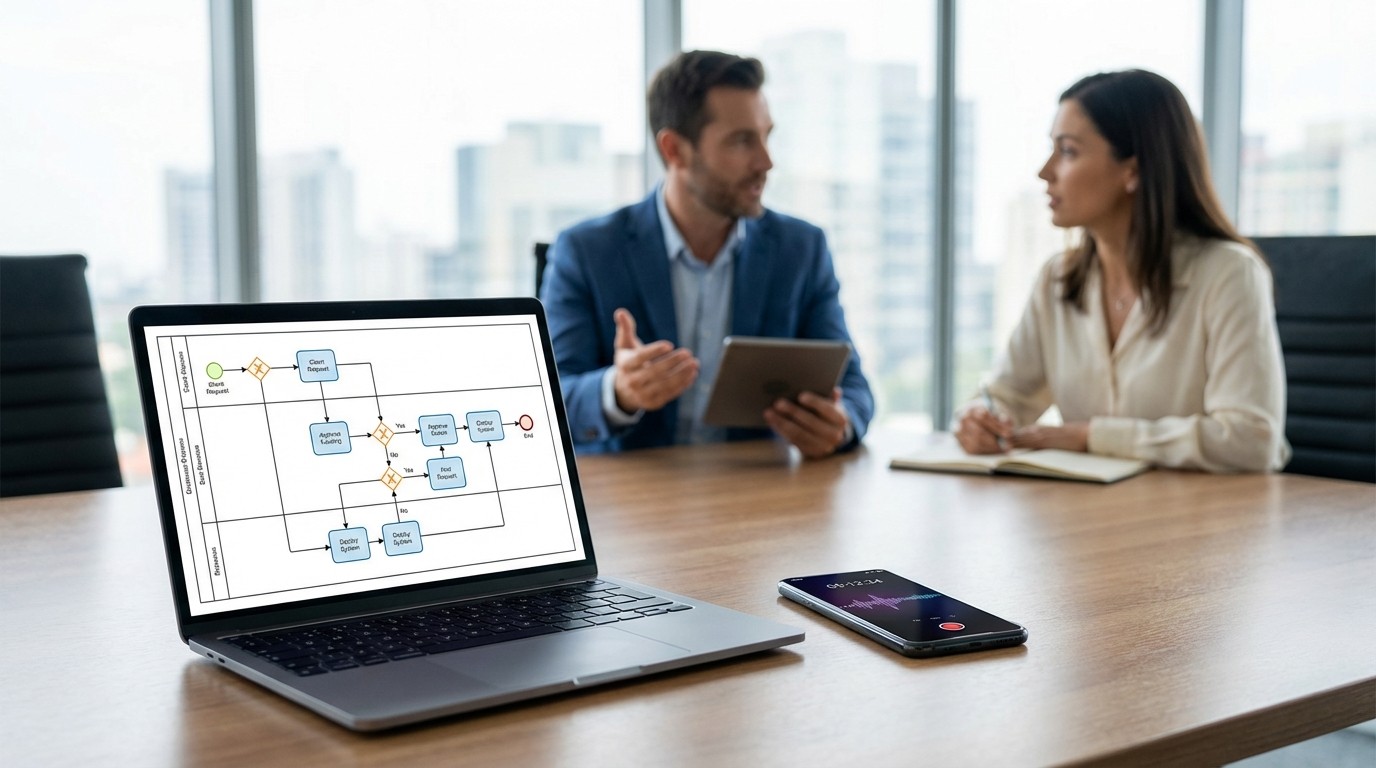
The workflow that works is unglamorous. The engineer runs the conversation. The recording, transcript or existing procedure document goes in. A structured BPMN 2.0 model comes out. The engineer then does the part that requires expertise: correcting it.
That last verb matters. Correcting a draft is a different cognitive task from producing one, and it is much faster. It is also where experience shows. A senior engineer spots the missing compensation path in seconds. Drawing first would have cost two days before reaching that thought.
With ModelMatic, that loop is short enough to run inside the stakeholder session itself. The engineer stays the author. The tool just removes the typing.
Use the time you free up on the hard problems
Compressing production does not automatically create value. What you do with the recovered time does.
The highest-return uses we see:
Model the long tail. Regional variants and exception paths, the ones normally waved through as standard.
Keep documentation current. Re-model after every material change instead of once per audit cycle.
Go deeper on redesign. Spend the analysis on to-be, not on drawing as-is.
Prepare for automation. Agents and workflow engines need an explicit process definition before they can safely run any part of it.
That last point is becoming urgent. We wrote about why in BPMN and agentic AI.
Where AI should not be trusted
Being straight about the limits is what makes the rest credible.
An AI-generated model will confidently produce a clean diagram from an ambiguous conversation. It resolves ambiguity by guessing, and it does not flag that it guessed. If a stakeholder said "usually we escalate", the model will show an escalation path as though it were policy.
So treat every generated model as a draft with unmarked assumptions. Validate with the person who described it. Never let a generated model reach a compliance artefact without an engineer signing it off. Handled that way, the speed is a genuine gain. Handled carelessly, you have industrialised the production of plausible but wrong documentation.
Making the case internally
If you are the engineer proposing this, lead with the throughput argument rather than the AI argument. Colleagues and managers respond to "we can cover the other thirty processes this quarter". They respond far less to "we are adopting AI".
It also helps to keep the standard fixed. Vendor-neutral BPMN 2.0 means the output stays portable, which removes the usual objection about tooling lock-in. If your team needs a shared baseline, start with what BPMN is and BPMN gateways.
Want to test it against a process you already know well? Book a demo and bring one real recording, ideally a messy one.